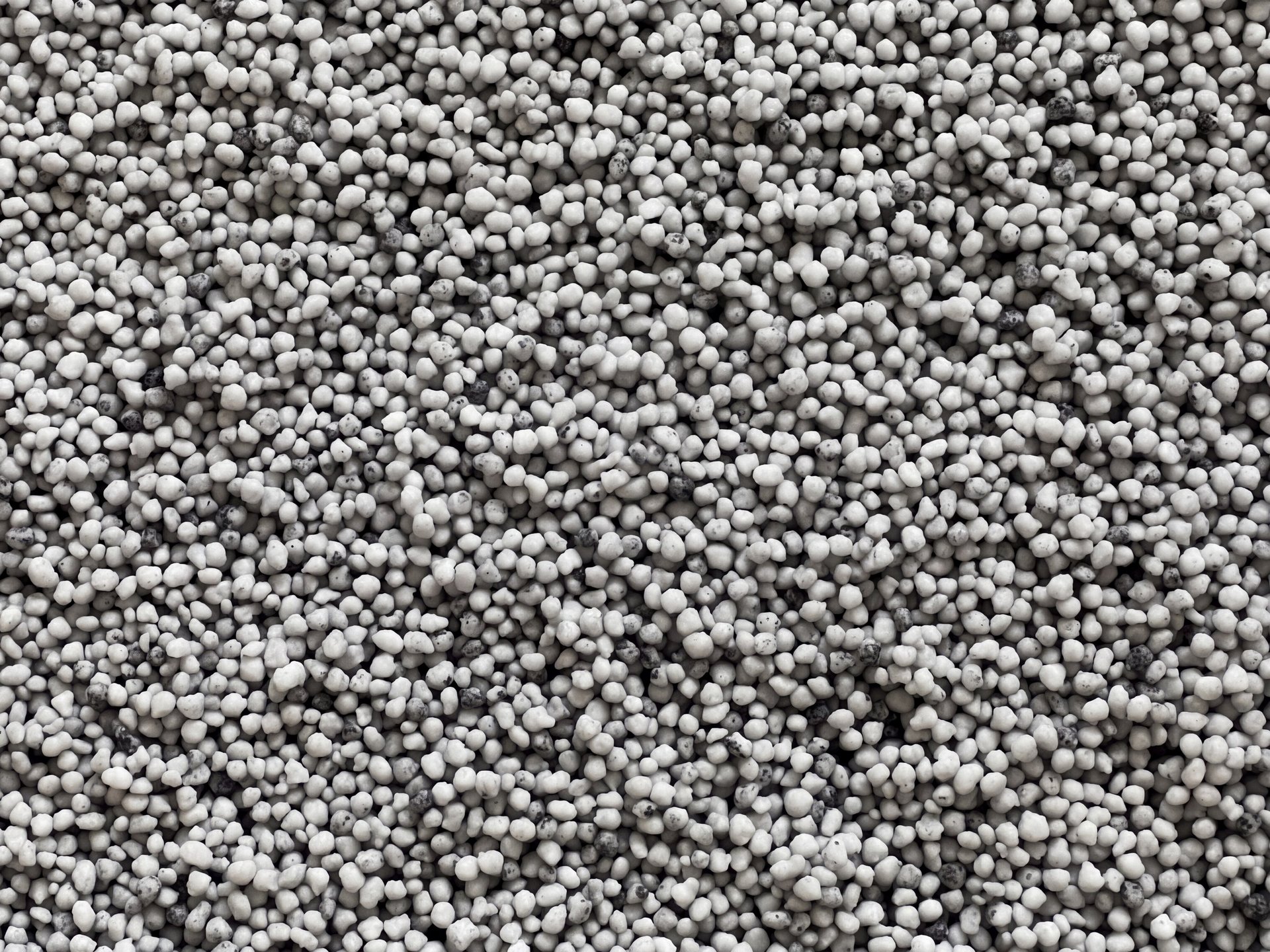
Flexibility
The all-purpose fertiliser with sulphur!
Thanks to environmental protection measures such as flue gas desulphurisation, sulphur inputs from the atmosphere have fallen to below 10 kg S/ha per year almost everywhere.
Only small quantities (10 to 40 kg S/ha) are released from soil reserves each year. This is often insufficient to provide plants with adequate sulphur. The amount of plant-available sulphur in the soil is subject to considerable fluctuations, depending on the site and the level of fertilisation. Sulphur deficiency therefore frequently occurs, particularly during periods of low mineralisation, such as before or at the start of the growing season.
Avoiding sulphur deficiency
The sulphur requirement of most agricultural crops ranges from 10 to 70 kg/ha S*; consequently, sulphur input from the atmosphere and supply from the soil are no longer sufficient to replace the sulphur removed by average yields.
Furthermore, ever-increasing yields and quality targets have led to a rise in sulphur removal. As a result, sulphur deficiency is a frequent occurrence. Even latent sulphur deficiency leads not only to reduced yields but also to lower protein content, poorer crop quality and reduced nitrogen utilisation.
Reduced sulphur emissions from the atmosphere since 1990
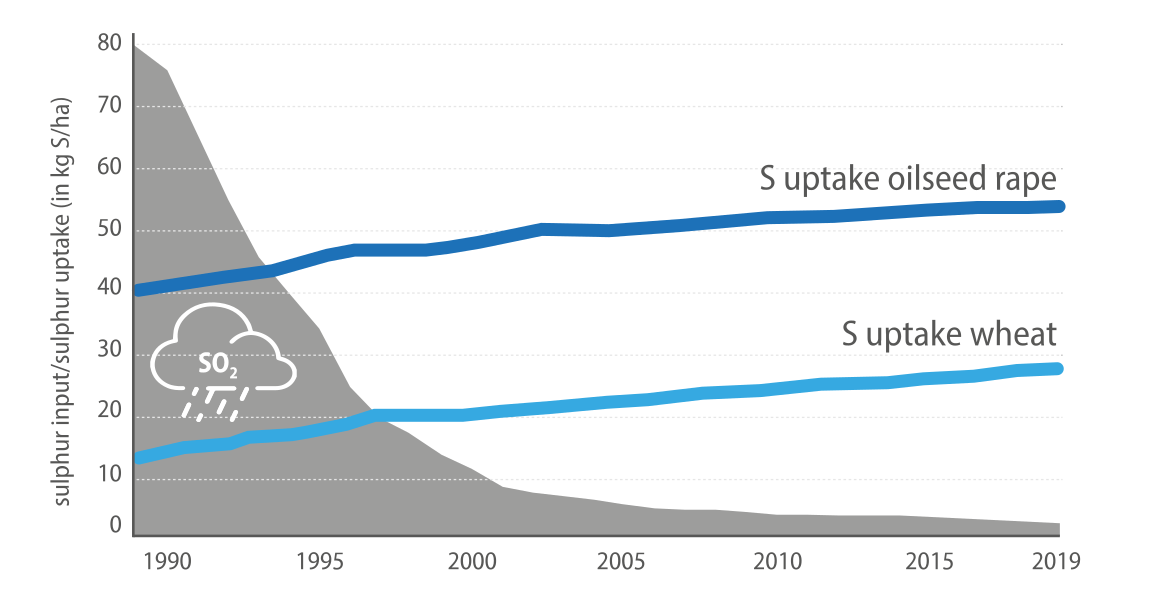
*Source: Sturm, H.; Buchner, A. and Zerulla, W. (1994): Gezielter düngen. 3rd, completely revised edition, Verlagsunion Agrar, DLG-Verlag, Frankfurt am Main.
Get a no-obligation consultation now!
Environment
Stabilised with nitrogen.
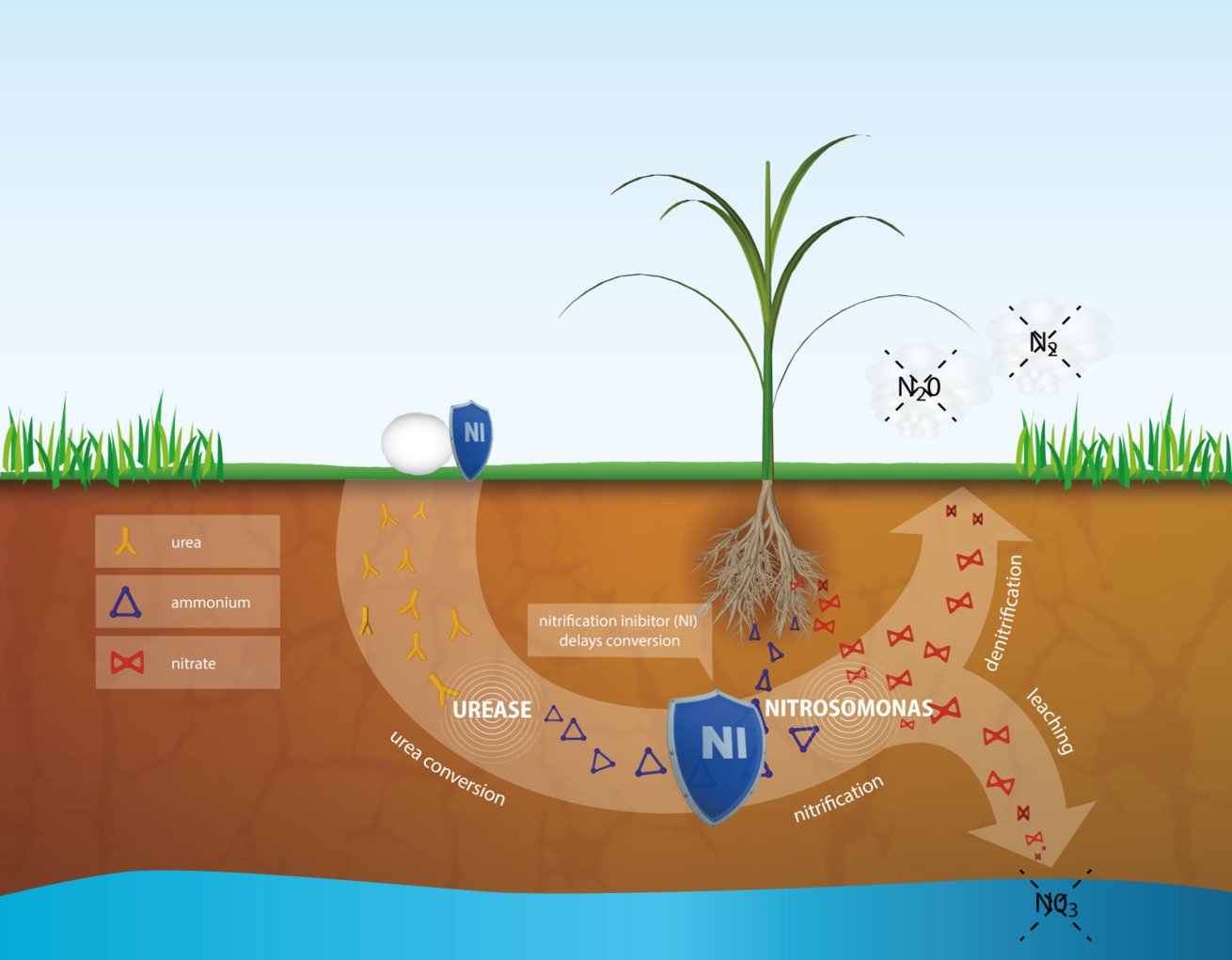
The stabilisation of nitrogen results in particularly sustainable and efficient plant nutrition. The highly efficient nitrification inhibitor in ALZON® 33-S delays the conversion of nitrogen from the stable ammonium form to the mobile nitrate form by six to ten weeks. The stabilised nitrogen remains in the topsoil and is available to the plants at all times in the ammonium form, whilst being protected from leaching into deeper soil layers. Earlier fertilisation dates and the possibility of combining partial applications, particularly during early summer droughts, ensure that sufficient nitrogen is always present in the root zone and is available as required and at the right time, regardless of the weather. The result is high yields of good quality.
In line with the new Fertiliser Ordinance, ALZON® 33-S reduces the risk of nitrate migration and leaching, as well as nitrous oxide emissions during periods of heavy rainfall. Nitrate migration can be reduced by up to 50 per cent. Nitrous oxide emissions are reduced by as much as 75 per cent.
ALZON® 33-S – solid returns – high quality.
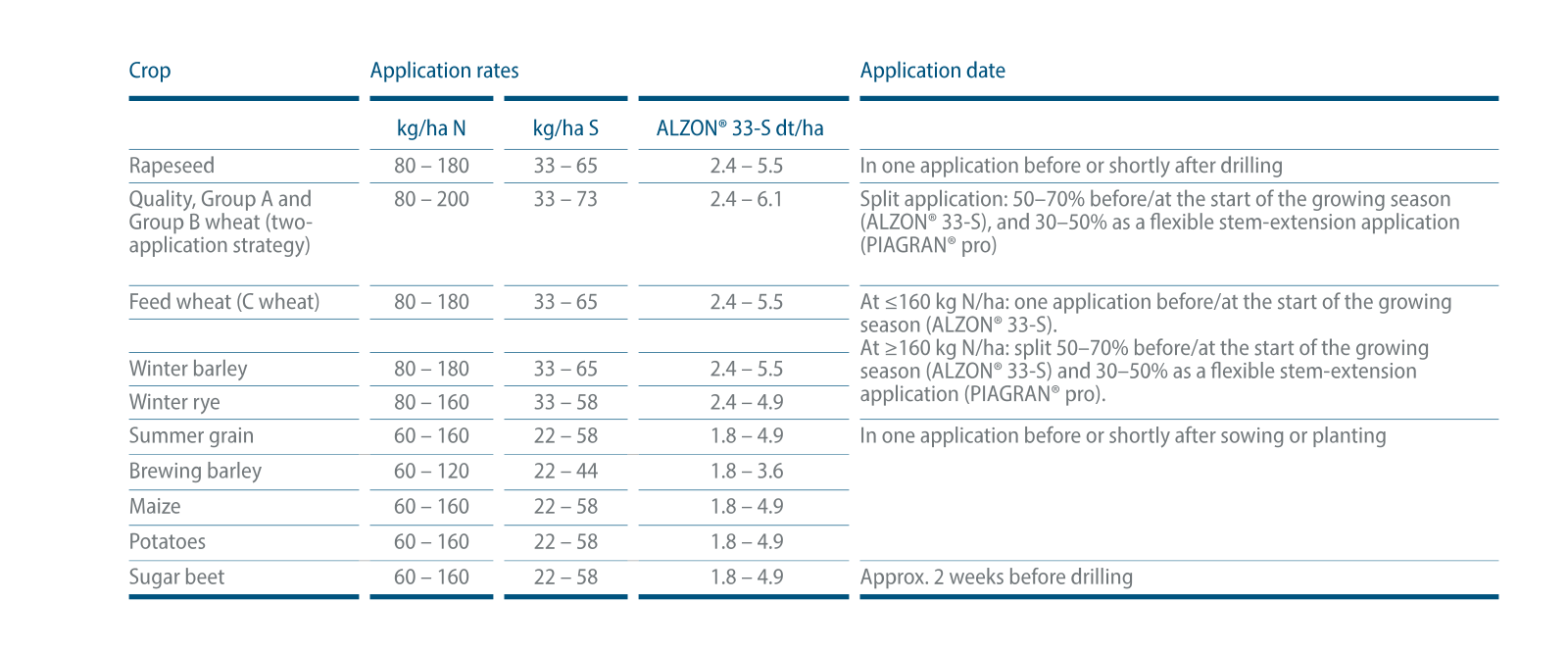
With ALZON® 33-S, you can effectively apply nitrogen and sulphur simultaneously in the optimum ratio. The following recommendations are based on a wide range of trials conducted as part of our application research and in practical use. They should be adapted to the plants’ requirements in accordance with the provisions of the Fertiliser Ordinance, taking into account your local conditions.
For further information on the correct use of ALZON® 33-S, please visit www.duengerfuchs.de or feel free to contact your specialist adviser at any time.
Get a no-obligation consultation now!
Yield
Safety with nitrogen and sulphur.
The unique combination of stabilised nitrogen with sulphur that has both an immediate and a long-lasting effect delivers a significant increase in yield.
Reaping the benefits of nitrogen stabilisation
Stabilising nitrogen brings considerable benefits: fewer split applications are required, application dates can be arranged more flexibly, and nitrogen losses are minimised. Last but not least, yields and quality improve noticeably compared with conventional fertilisers. N efficiency – a key parameter under the new Fertiliser Ordinance – is increased.
Sustainable sulphur supply
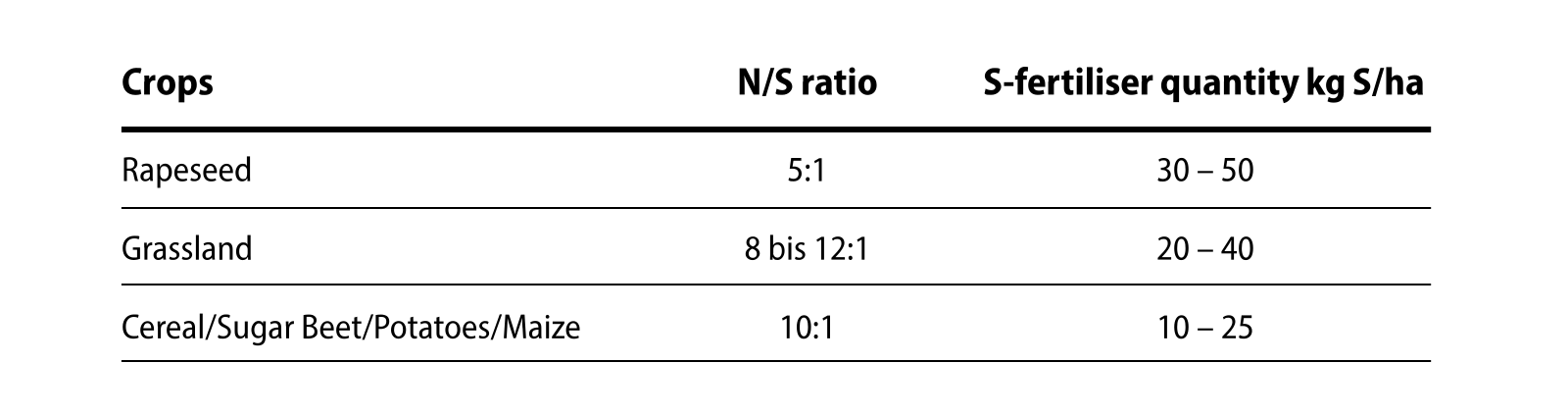
The sulphur requirements of agricultural crops vary. Sulphur deficiency can lead to problems with nitrogen uptake. Nitrate cannot be converted due to a lack of the sulphur-containing enzyme nitrate reductase. This disrupts the incorporation of nitrogen into amino acids and inhibits protein formation. A deficiency of one kilogram of sulphur per hectare can block the uptake of 10 to 15 kg of nitrogen.
The nitrogen-sulphur ratios of various crops
ALZON® 33-S combines the benefits of nitrogen stabilisation with those of high nutrient content in an optimal N/S ratio. As a brand-name quality finished product, ALZON® 33-S meets the highest standards for storage and application accuracy. In addition to providing a nutrient supply tailored to crop requirements, it reduces nutrient losses and protects the environment. The greater flexibility and the ability to combine fertiliser applications help to ease peak workloads. ALZON® 33-S is particularly suitable for the initial fertilisation of all crops:
- Nitrogen and sulphur supply tailored to crop requirements for high yields and quality
- Reduction in the number of passes and high flexibility during early application at the start of the fertilisation programme
- High nitrogen efficiency combined with premium quality
Recommended use for ALZON® 33-S:
Get a no-obligation consultation now!
Product
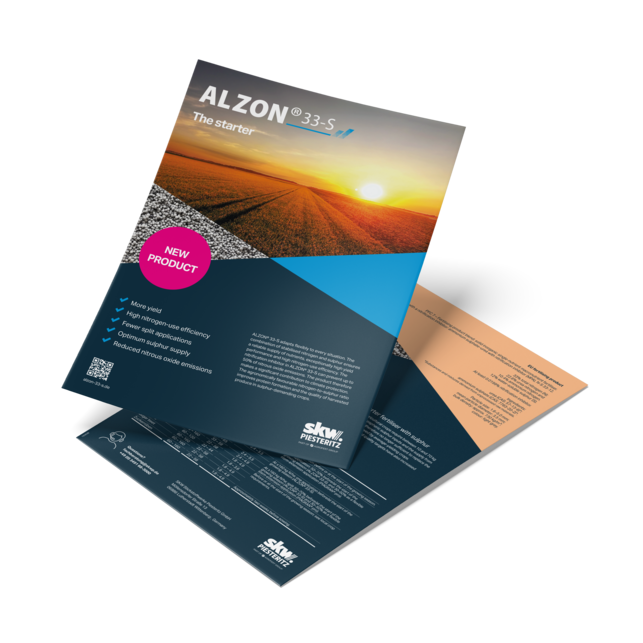
Product characteristics ALZON® 33-S
EU fertiliser product
- PFC 7 – Fertiliser blend: Solid inorganic single-nutrient macronutrient
- Fertiliser containing a nitrification inhibitor, ammonium sulphate-urea with a nitrification inhibitor (MPA), N-S 33-12
- 33 % N total nitrogen as
- 22.6 % N urea nitrogen
- 10.4 % N ammonium nitrogen
- 12 % S water-soluble sulphur
- min. 0.023 % nitrification inhibitor
Ingredients:
- Urea (CAS: 57-13-6)*
- Ammonium sulphate (CAS 7783-20-2)*
*Substances and mixtures derived from unprocessed raw materials
Characteristic values:
| Particle size (95 per cent of the product): | 1,6 - 5,6 mm |
| Average particle diameter: | ca. 3,5 mm |
| Bulk density: | ca. 740 kg/m³ |
| Biuret content: | max. 0,9 % |